Status Of Agricultural Innovation In TAP-AIS Countries
The TAP-AIS project, funded by the European Union and implemented by the Food and Agriculture Organization (FAO), is a significant initiative aimed at enhancing agricultural innovation systems in various countries across Africa, Latin America, Asia, and the Pacific. The project's primary goal is to strengthen national capacities to innovate within agricultural systems, particularly in the context of climate-relevant, productive, and sustainable transformation of agriculture and food systems. By supporting the Tropical Agriculture Platform (TAP), the TAP-AIS project seeks to address the challenges of food security, climate change, and sustainable agriculture through a comprehensive approach that involves knowledge sharing, capacity development, and the promotion of innovation.
This section provides an overview of the current state of agricultural innovation in the countries involved in the TAP-AIS project, using several key indicators to measure progress and areas for improvement. These indicators include agricultural productivity, cereal yields, innovation performance, and the level of cooperation between universities and industries in research and development (R&D). By analyzing these indicators, we can better understand the strengths and weaknesses of agricultural innovation systems in these countries and identify opportunities for further development and support.
Agriculture, forestry, and fishing, value added per worker
This chart illustrates the productivity of the agricultural sector in each country, measured by the value added per worker. Countries are sorted in descending order, highlighting which nations have higher productivity levels. Higher values indicate more efficient and productive agricultural systems, which are crucial for economic growth and food security.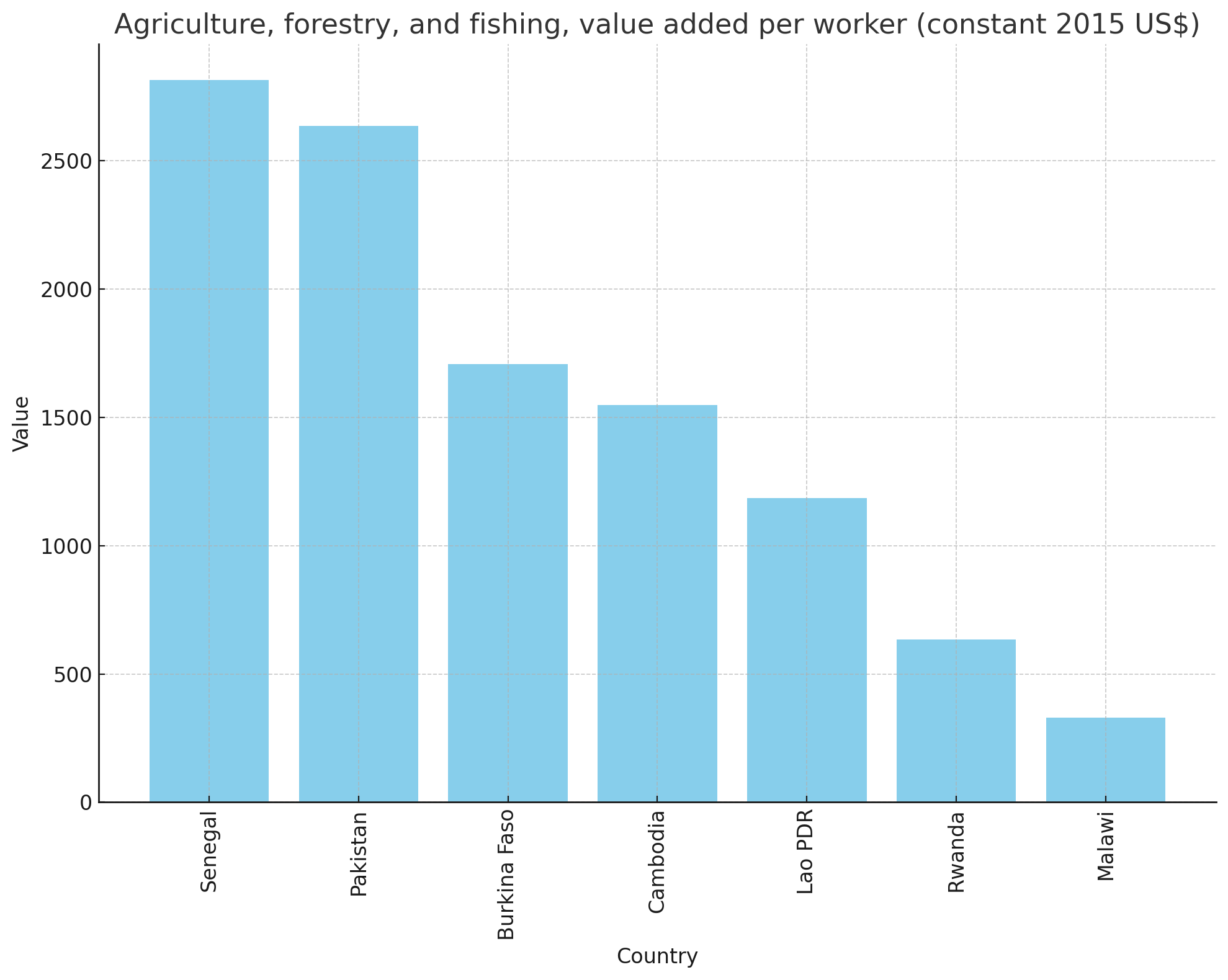
Cereal yield (kg per hectare)
The cereal yield indicator provides insight into the efficiency of crop production in the countries involved in the project. This chart shows the average yield of cereal crops per hectare of land, which is a critical measure of agricultural performance and food production capacity. Countries with higher yields are typically better positioned to ensure food security and cope with climate change impacts.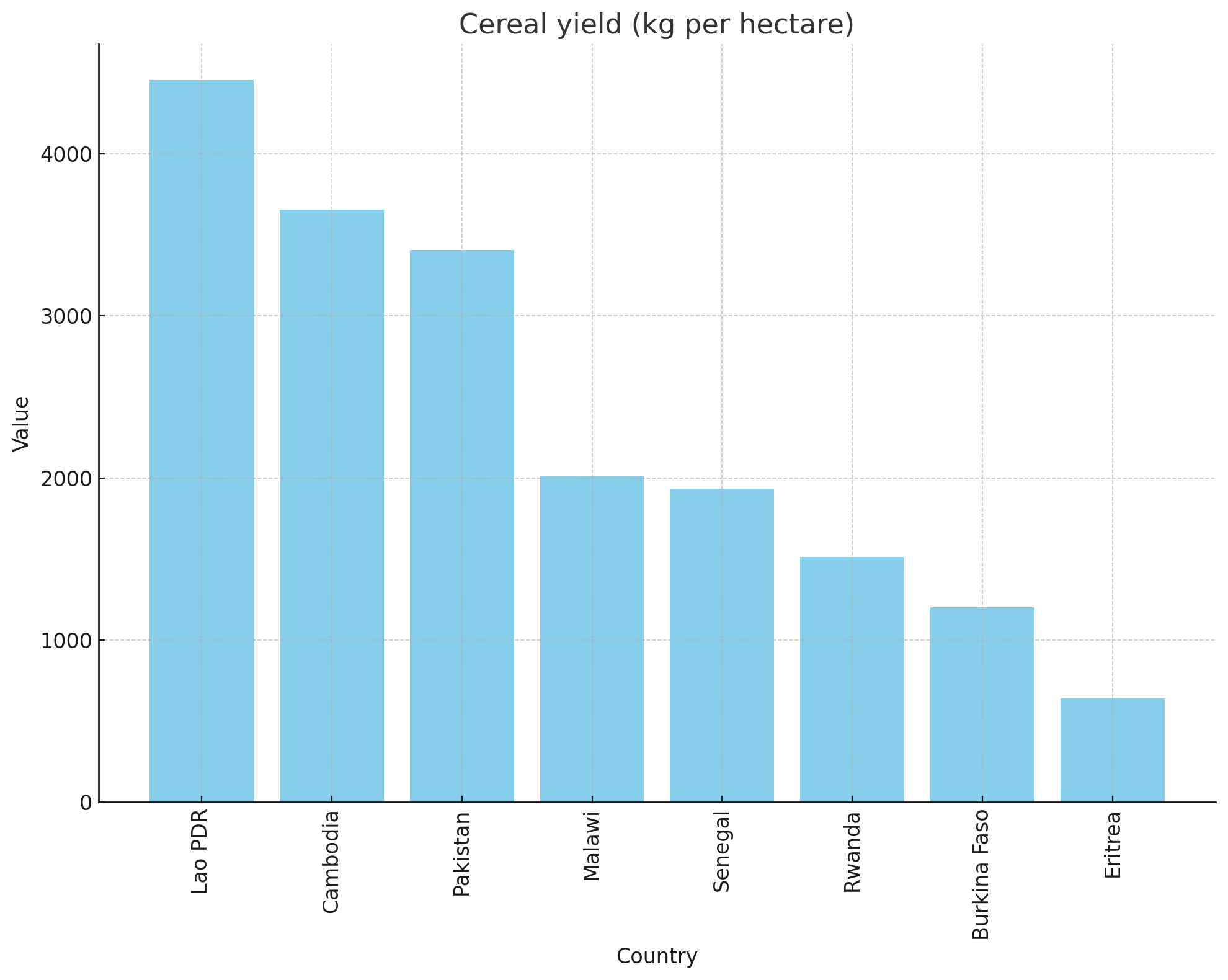
Global Innovation Index (GII) (0-100)
This chart ranks countries based on their overall innovation performance, as measured by the Global Innovation Index. The index takes into account various factors, including the quality of innovation ecosystems, research outputs, and the ability to commercialize new ideas. Higher scores indicate a more robust innovation environment, which is essential for driving agricultural transformation.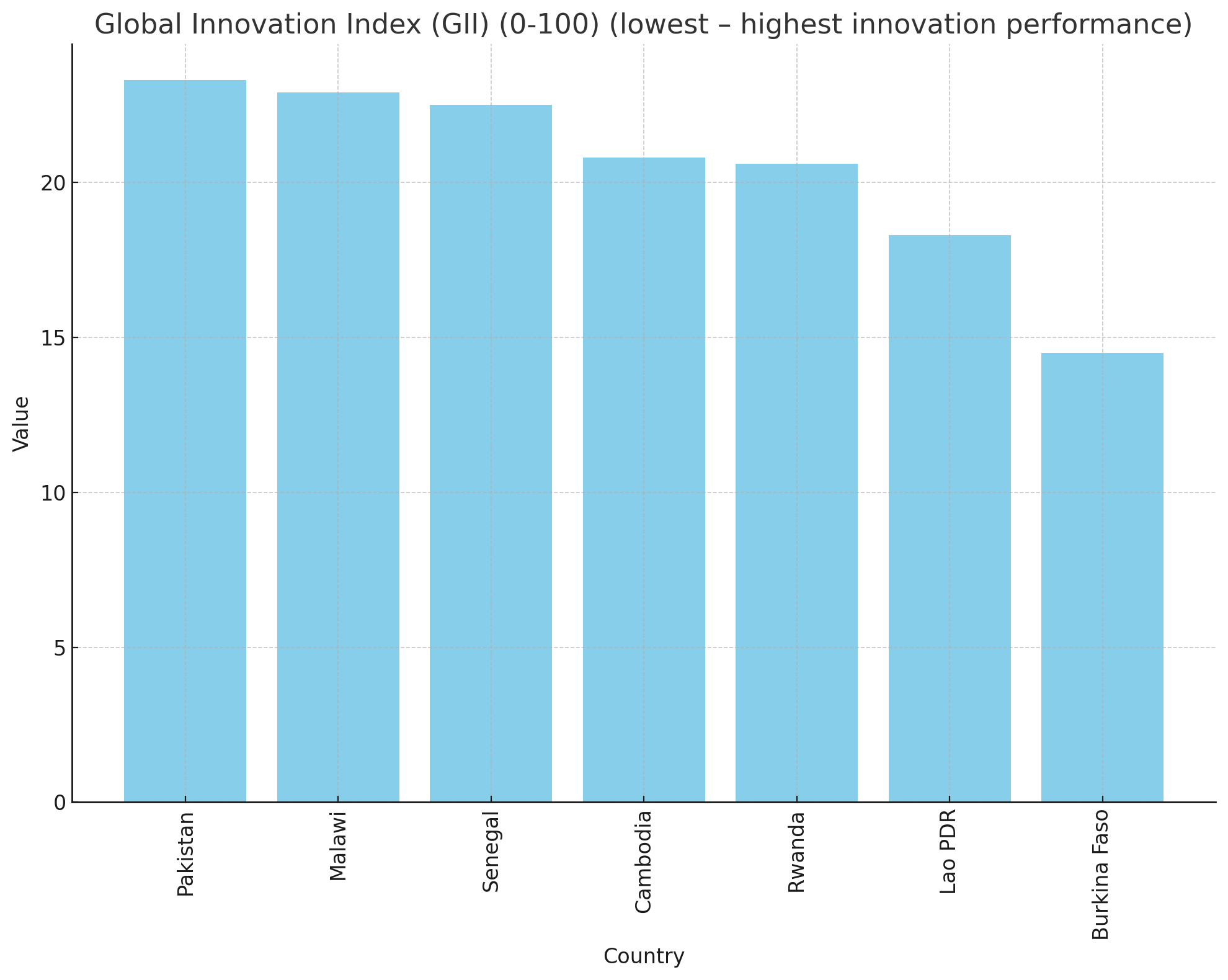
ODA Commitments for Agriculture, forestry, and fishing by all official donors (current USD million)
This chart reflects the level of official development assistance (ODA) committed to supporting agriculture, forestry, and fishing in the participating countries. The funds provided by donors are crucial for building capacities, enhancing infrastructure, and supporting innovation initiatives in these sectors. Countries receiving higher ODA commitments have more resources available to implement and sustain innovative practices.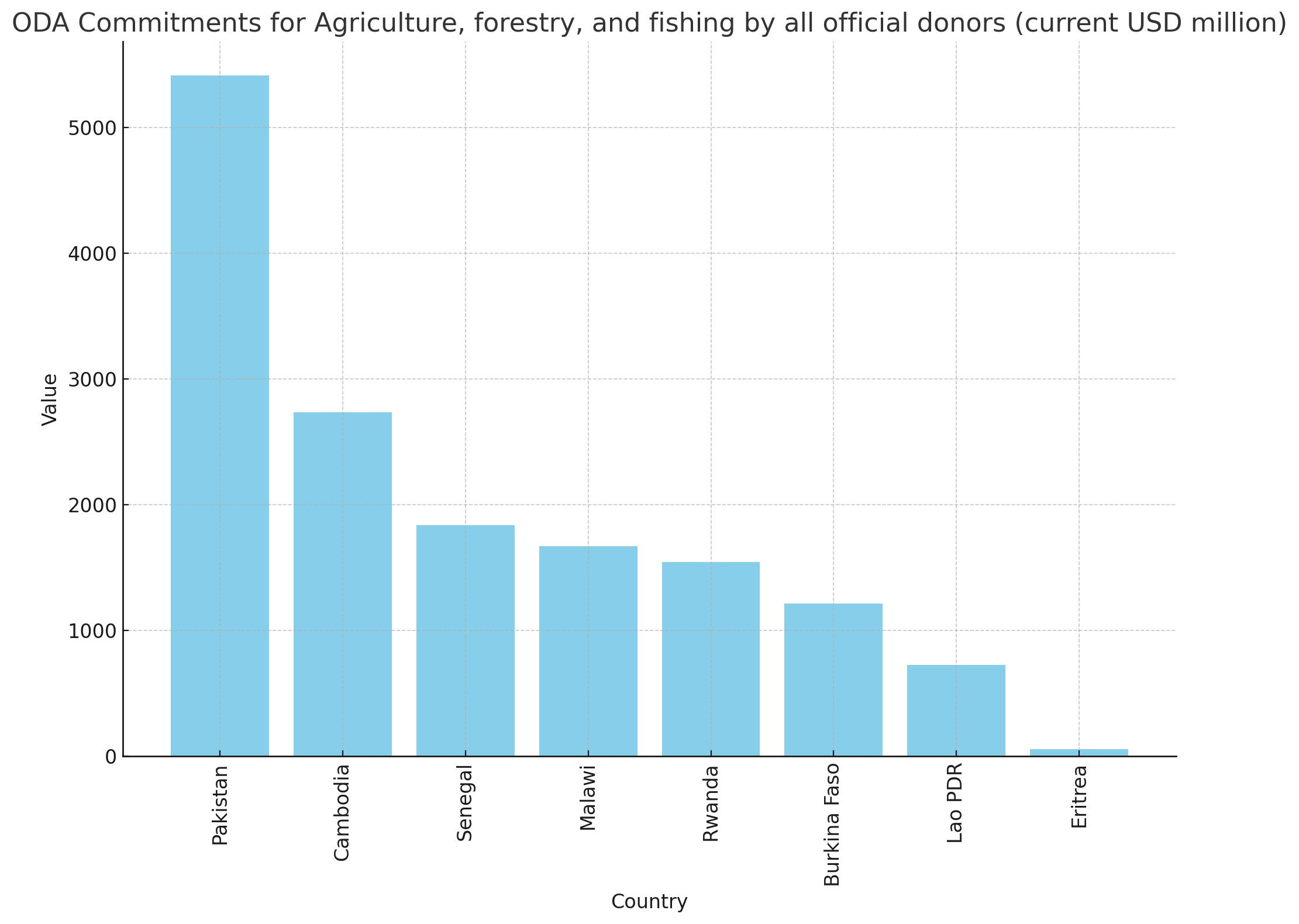
University-industry cooperation in R&D (0-100)
This chart measures the extent of collaboration between universities and industries in research and development activities, which is vital for fostering innovation in agriculture. Strong cooperation leads to the development of new technologies, practices, and solutions that can significantly improve agricultural productivity and sustainability. Countries with higher scores have more integrated and effective innovation systems.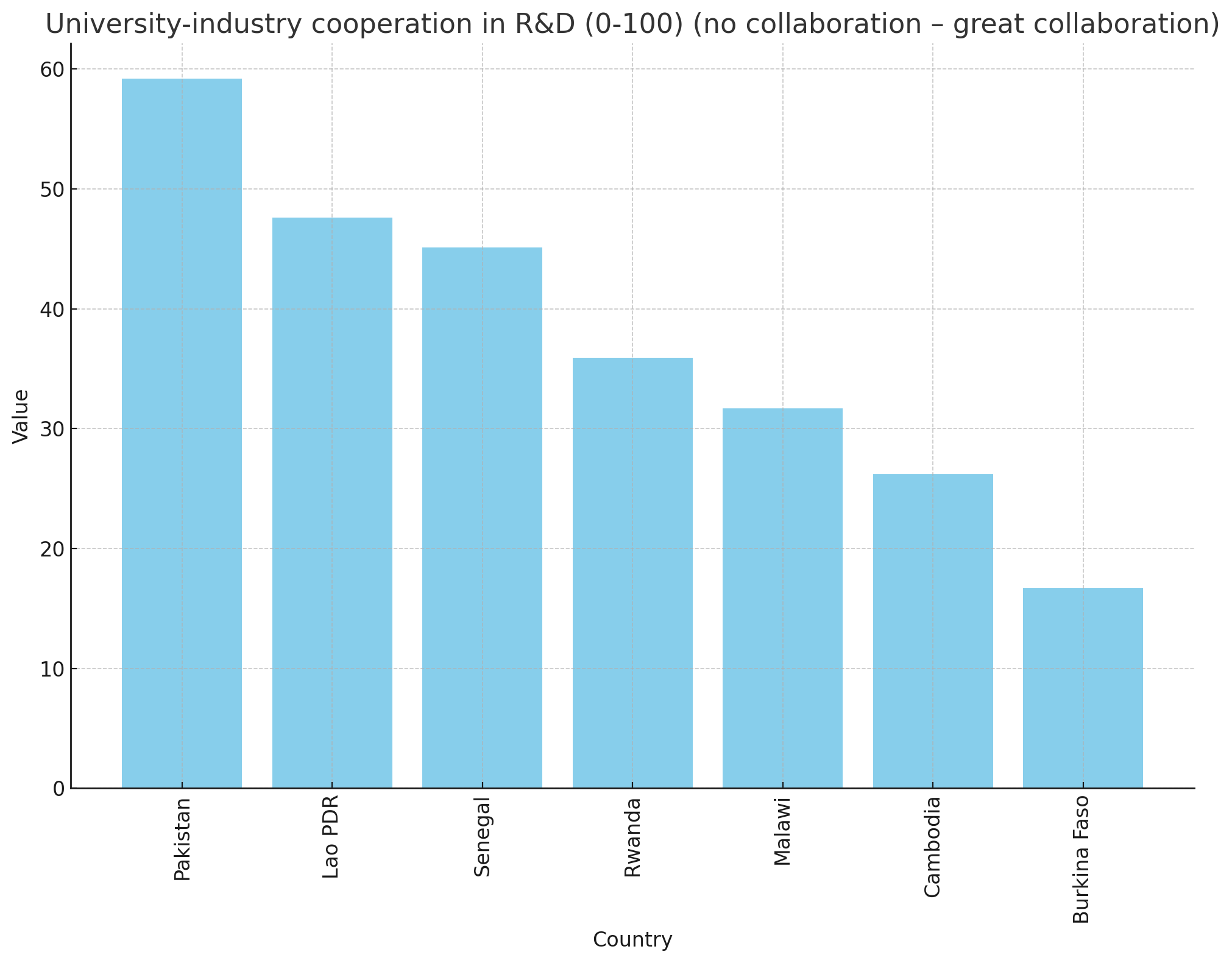
These charts provide a comprehensive overview of the current state of agricultural innovation in TAP-AIS countries, highlighting both achievements and areas that require further attention and support. By understanding these indicators, stakeholders can better tailor their efforts to enhance agricultural innovation systems, ultimately contributing to more sustainable and resilient food systems globally.