Status Of Agricultural Innovation In Latin American Countries
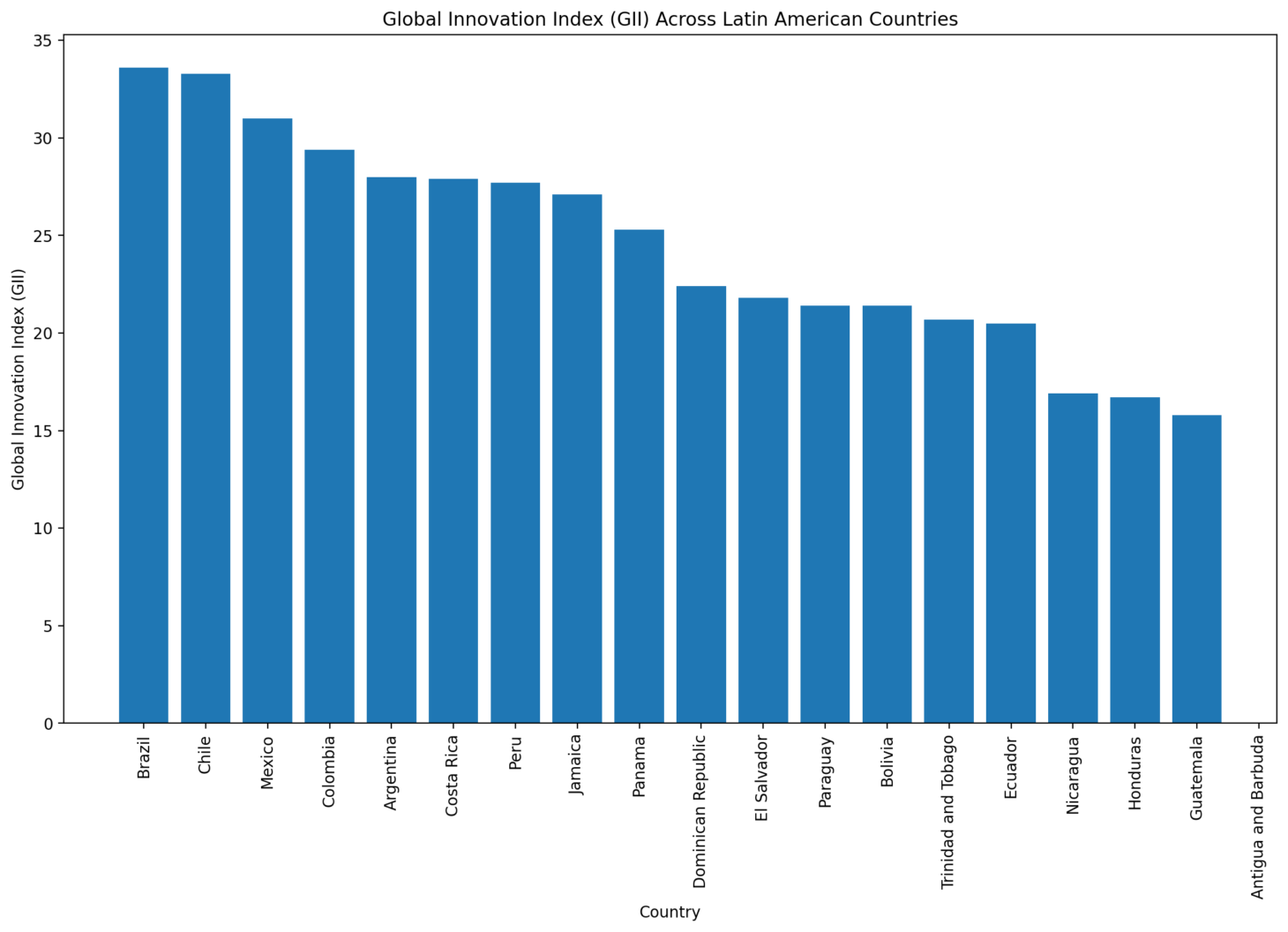
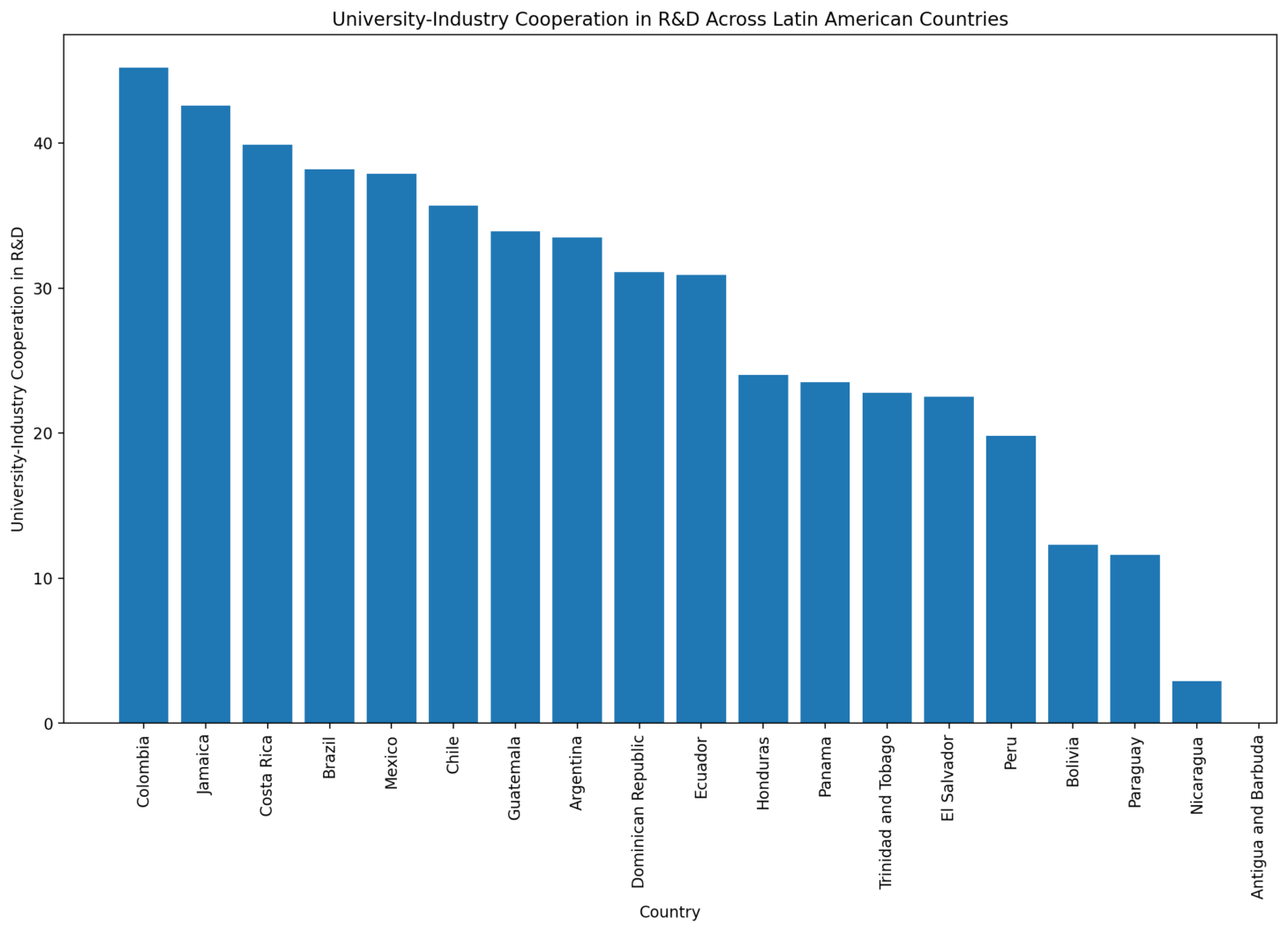
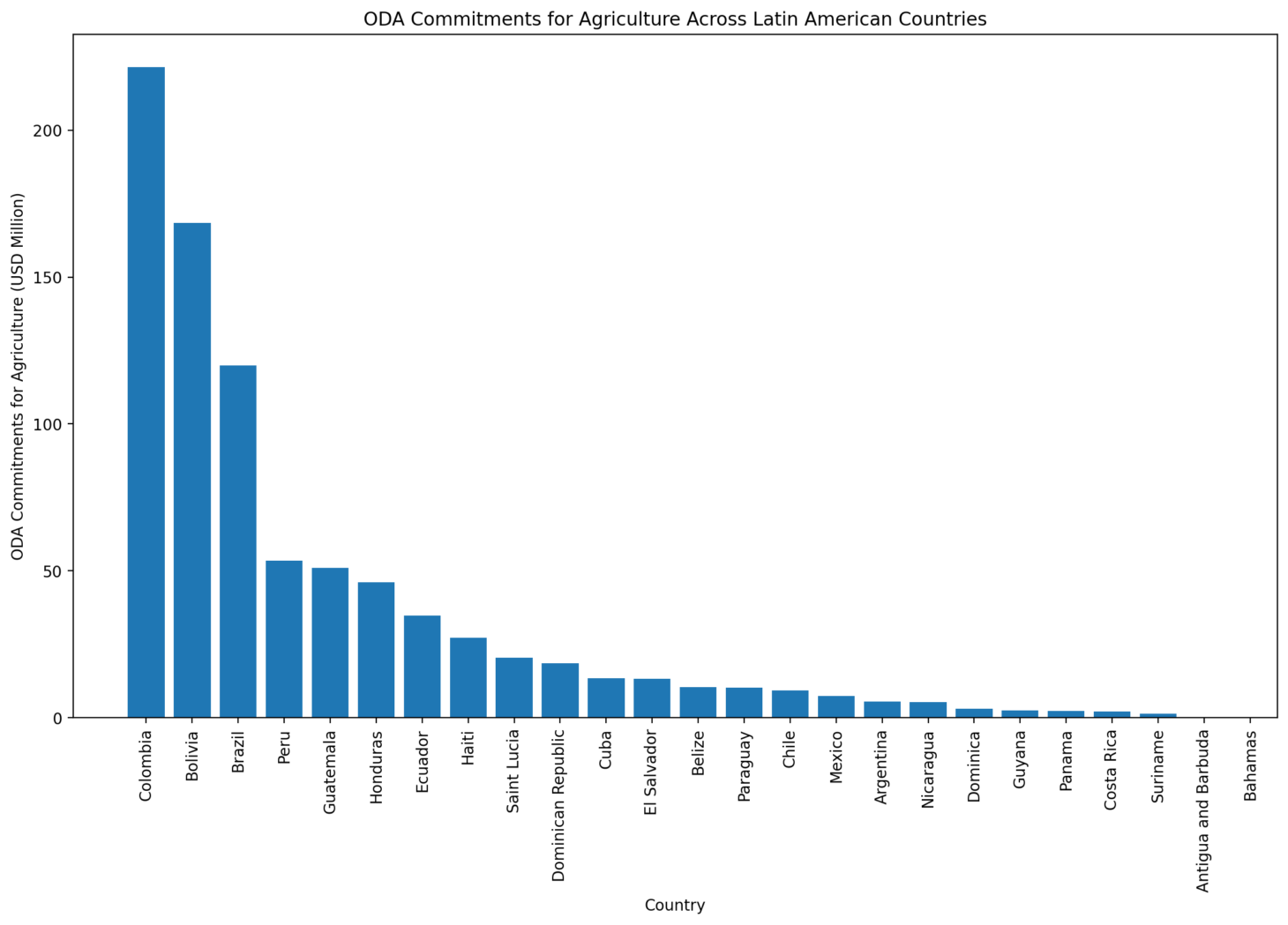
Latin America and the Caribbean (LAC) region exhibits a diverse landscape of agricultural productivity and innovation, shaped by varying levels of development, investment, and collaboration between the academia and industry. Countries like Brazil and Argentina demonstrate significant innovation prowess and agricultural productivity, positioning themselves as leaders in the region. Brazil, with a Global Innovation Index (GII) score of 33.6, excels in university-industry cooperation in R&D, reflecting a robust innovation ecosystem. Colombia stands out as the highest recipient official development assistance (ODA) and showcases the highest level of university-industry cooperation in R&D. Conversely, nations like Honduras and Nicaragua face challenges in both innovation and productivity, highlighting the disparities within the region. The allocation of Official Development Assistance (ODA) for agriculture, ranging from significant investments in Colombia and Bolivia to minimal support in countries like Antigua and Barbuda, further underscores the uneven landscape of agricultural support and development across LAC.
This variation underscores the critical need for targeted policies and investments to foster innovation and enhance productivity in lagging countries while sustaining growth in leading nations. The "Status Of Agricultural Innovation In Latin American Countries" section aims to provide a comprehensive overview of these dynamics, analyzing the factors driving innovation and productivity across the region. By examining key indicators such as the GII scores, cereal yields, and ODA commitments, this section will explore the successes and challenges faced by LAC countries in their pursuit of agricultural innovation. It will delve into the role of government policies, international aid, and the private sector in shaping the agricultural innovation landscape, offering insights into the pathways towards sustainable agricultural development and innovation in the region.
The charts belowcollectively highlight the diversity in Latin America regarding collaboration between universities and industries, the financial support for agriculture, and the broader innovation landscape. Countries with higher levels of university-industry cooperation, significant ODA commitments for agriculture, and higher GII scores are likely better positioned to adopt and develop agricultural innovations. This could lead to enhanced productivity, sustainability, and competitiveness in the agricultural sector. However, it's crucial to recognize that these factors are interrelated, and improvements in one area can positively impact others, contributing to a more robust innovation ecosystem for agriculture across the region
The first chart visualizes the level of university-industry cooperation in R&D across different Latin American countries. We observe a wide range of cooperation levels, with Colombia showcasing the highest level of cooperation. This suggests Colombia could have a more collaborative environment between universities and industries, potentially fostering innovation in agriculture. Conversely, countries with lower scores, such as Nicaragua, indicate less collaboration, which could impact their agricultural innovation capabilities. The varying levels of cooperation may influence how effectively these countries can innovate and apply new technologies or processes in agriculture.
The second chart presents the official development assistance (ODA) commitments received by each country for agriculture. Colombia stands out as the highest recipient, followed by Bolivia and Brazil. This financial support is crucial for developing agricultural sectors, especially in funding research, infrastructure, and technology that could enhance productivity and sustainability. The disparities in ODA commitments might reflect differing needs, priorities set by donors, or the countries' ability to attract aid, which could significantly influence agricultural development and innovation.
In the third chart, countries are ranked based on their Global Innovation Index (GII) scores. Brazil and Chile lead, indicating a strong overall innovation ecosystem in these countries, which likely benefits agriculture among other sectors. The GII score reflects a wide array of factors, including technological and creative outputs, infrastructure, market sophistication, and the quality of higher education. Higher GII scores in some countries suggest they have a more conducive environment for innovation, which could translate into more advanced agricultural practices and productivity.